.png)


Smoke Odor Removal Methods That Actually Work
A property can look clean after a fire and still smell like smoke days or months later. That lingering odor is not simply an inconvenience. It can signal soot residue in insulation, drywall, HVAC components, fabrics, and other materials throughout the building. Effective smoke odor removal methods address those particles at their source instead of trying to cover them with fragrances.
For homeowners, landlords, and business owners, the right response depends on the fire size, the type of materials burned, how long the smoke remained indoors, and whether water from firefighting affected the property. A small cooking incident may respond to careful cleaning and ventilation. A structural fire, electrical fire, or furnace puff-back usually requires professional restoration equipment and a documented cleanup plan.
Why Smoke Odor Is So Difficult to Remove
Smoke is made up of tiny particles, gases, and oily residues. Those residues do not stay on obvious surfaces. They move through open doors, wall cavities, return vents, carpeting, furniture, drapes, and stored belongings. Even rooms far from the fire can be affected.
Different fires also leave different residues. Protein smoke from burnt food can create a strong, persistent odor with little visible soot. Wood and paper fires often leave dry soot that can travel widely. Fires involving plastics, synthetic materials, or petroleum-based products can leave sticky residues that are harder to remove and may carry more hazardous compounds.
That is why opening windows, burning candles, or spraying deodorizer rarely solves the problem. Fresh air can reduce the immediate smell, but it does not remove soot from surfaces or particles trapped in porous materials. If the source remains, humidity, heat, or normal HVAC operation can make the odor return.
Smoke Odor Removal Methods That Start With Source Control
The first priority is to stop smoke residue from spreading further. Avoid turning on the HVAC system until it has been evaluated if smoke traveled through the building. Do not aggressively wipe soot from walls or ceilings with a dry rag. Rubbing can grind particles into paint and finishes, making cleanup more difficult.
Professional restoration begins with an assessment of affected rooms, building materials, contents, and air systems. Technicians identify the type of smoke damage, measure contamination, and determine which items can be cleaned, restored, sealed, or removed. This inspection also helps create accurate records for an insurance claim.
HEPA Vacuuming and Dry Soot Removal
For dry soot, HEPA vacuuming is often one of the first cleaning steps. High-efficiency filtration helps capture fine particles without blowing them back into the air. Restoration professionals may also use specialized dry-cleaning sponges on walls, ceilings, and structural surfaces before wet cleaning begins.
This work must be done carefully. The goal is to lift residue away from the material, not smear it across the surface. Standard household vacuums may release fine soot through their exhaust, and ordinary cleaning cloths can spread contamination.
Wet Cleaning for Oily or Sticky Residue
Oily smoke residues generally need appropriate detergents, degreasers, and controlled wet-cleaning techniques. The cleaning product must match the surface. Painted drywall, wood trim, metal fixtures, tile, cabinetry, and upholstery all respond differently to moisture and chemical cleaners.
More cleaning solution is not always better. Over-wetting drywall, flooring, or cabinetry can cause additional damage, particularly after a fire where materials may already have been exposed to heat or firefighting water. In properties with water damage, drying and smoke cleaning need to be coordinated so moisture does not lead to mold growth.
Contents Cleaning and Textile Treatment
Smoke odors often remain strongest in soft contents: clothing, bedding, upholstered furniture, rugs, books, paper files, and window coverings. Some items can be professionally cleaned using specialized textile, wet-cleaning, or dry-cleaning processes. Others may be too damaged or too porous for reliable restoration.
A good restoration plan separates salvageable contents from items that should be documented and removed. Trying to save every item can increase cost and delay the return to a safe, odor-free space. For commercial properties, this assessment is especially valuable for inventory, records, electronics, and equipment.
Air Treatment Helps, But It Cannot Replace Cleaning
Air treatment is useful after the physical residue has been addressed. It is not a shortcut around source removal. The right method depends on the property, the contamination level, and whether people, pets, or sensitive equipment are present.
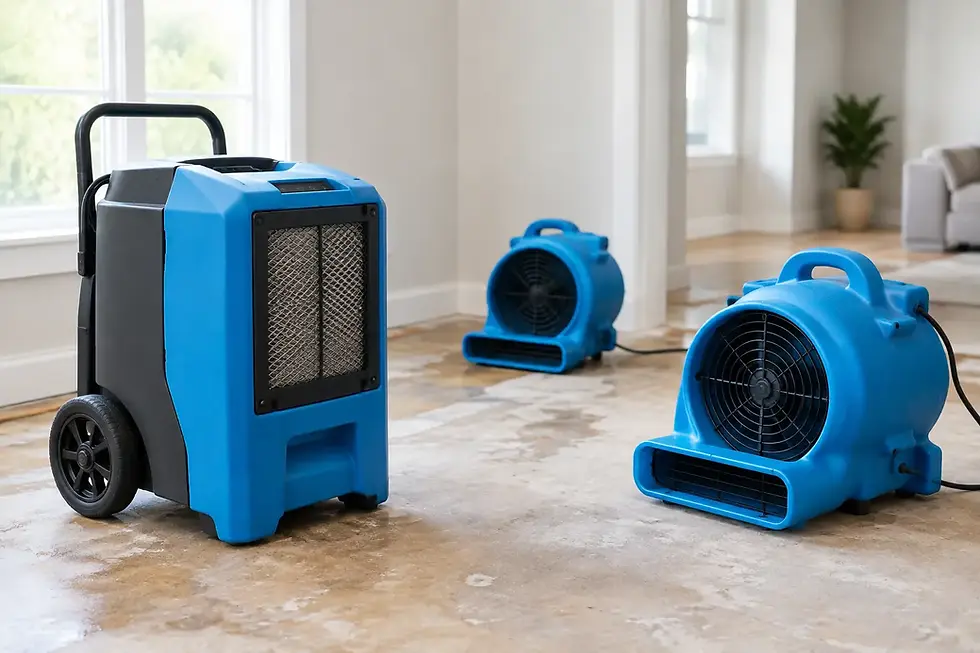
HEPA air scrubbers filter airborne particles and can help improve indoor air quality during cleanup. Activated carbon filtration can help absorb some odor-causing gases. These machines are commonly used alongside containment measures to keep soot and odors from moving into unaffected areas.
Thermal fogging may be used to distribute a deodorizing product that reaches areas smoke has penetrated. Hydroxyl generators can help neutralize odors while occupied spaces are managed appropriately. Ozone treatment can also be effective in certain controlled situations, but it requires strict safety procedures. Ozone should never be used in an occupied area, around pets, or as a casual do-it-yourself remedy. It can irritate the respiratory system and may damage some materials.
The key point is simple: deodorization works best after cleaning. If smoke residue is still on framing, inside ducts, or behind baseboards, air treatment may temporarily reduce the smell without providing a permanent result.
When Sealing or Removing Materials Is Necessary
Some building materials absorb smoke too deeply to clean completely. Insulation, unfinished framing, particleboard, porous ceiling tiles, heavily damaged carpeting, and certain upholstered materials may continue releasing odor after surface cleaning. In these cases, removal is often the most dependable option.
After cleaning and drying, restoration crews may apply a specialized odor-blocking sealer to appropriate structural surfaces. This is not ordinary paint. A proper sealer is used only after contamination has been removed as thoroughly as possible. Painting over dirty soot can lock in stains while leaving odor problems and adhesion issues behind.
Drywall is a common judgment call. Light smoke exposure may be cleanable, while drywall exposed to heavy soot, heat, or water may need replacement. The same is true for cabinets and flooring. The right decision balances restoration cost, health considerations, appearance, and the likelihood that odor will return.
Do Not Forget the HVAC System
If smoke reached the heating and cooling system, every cycle can circulate odor and fine particles through the property. Replacing the filter alone may not be enough. Supply registers, return vents, the air handler, coils, ductwork, and insulation around the system may need inspection and cleaning.
Do not run a smoke-affected system just to test whether the smell is gone. If the system is contaminated, that can spread residue into rooms that were previously less affected. An HVAC evaluation should be part of the restoration plan when smoke traveled beyond the room of origin.
When to Call a Certified Smoke Restoration Team
A few smoke odors can be handled with careful cleaning after a minor, contained incident. However, professional help is the safer choice when the odor persists after cleaning, soot is visible outside the fire area, the HVAC system was operating during the fire, or water and smoke damage occurred together.
Call for professional assessment when any of these conditions apply:
The fire involved electrical wiring, plastics, fuel, chemicals, or unknown materials.
People in the building have coughing, eye irritation, headaches, asthma, or other respiratory concerns.
Smoke affected multiple rooms, common areas, tenant units, offices, or stored business materials.
Drywall, insulation, carpeting, cabinets, or structural framing may need removal or sealing.
You need photographs, moisture readings, itemized documentation, and estimates for an insurance claim.
For property owners in eastern Wisconsin, a fast response can prevent odor from settling deeper into contents and building materials. Lakeshore Restoration LLC provides 24/7 fire and smoke cleanup, odor removal, insurance documentation support, and reconstruction coordination for homes and businesses throughout the area.
After a fire, do not judge recovery by whether the visible soot is gone. A safe restoration is one where the source has been cleaned, affected materials have been addressed correctly, and the indoor environment is ready for people to return with confidence.


Comments