.png)


Emergency Flood Cleanup Timeline for the First Week
Updated: Aug 6

A flooded basement after a Wisconsin storm can go from soaked carpet to a mold or structural damage problem far faster than most property owners expect. An emergency flood cleanup timeline gives you a clear picture of what needs to happen first, what can wait, and why fast professional drying matters even when the water appears to be gone.
The right response depends on the source of the water, how long materials were wet, and which areas were affected. A clean supply-line leak is handled differently than stormwater, a backed-up drain, or sewage. Still, the first week follows a consistent pattern: stop the source, protect people and property, document the loss, remove water, dry the structure, and make informed repair decisions.
Why the First 24 Hours Matter Most
Water does not stay in one place. It wicks into drywall, insulation, baseboards, flooring layers, framing, cabinets, and belongings. In a finished basement, water can travel underneath vinyl plank or carpet padding well beyond the visible wet area. In a commercial space, it may move under walls, through storage areas, and into electrical or mechanical rooms.
The first 24 hours are about limiting that spread. Prompt extraction and controlled drying can often save building materials and belongings that would otherwise need replacement. Waiting can allow moisture to remain trapped behind walls or beneath floors, where surface fans alone cannot solve the problem.
Contaminated water raises the urgency. Floodwater from outdoors may contain dirt, bacteria, and chemical runoff. Water from a sewer backup or toilet overflow can expose occupants to harmful pathogens. Keep people and pets away from affected areas, especially if the water is discolored, has an odor, or came from a drain or sewer line.
Emergency Flood Cleanup Timeline: The First Hour
Your first priority is safety, not moving furniture. If water is near outlets, appliances, electrical panels, or active wiring, avoid entering the area until power can be safely evaluated. Do not use a household vacuum to remove standing water, and do not walk through water if there is any chance of an electrical hazard.
If it is safe to do so, stop the source. Shut off the main water valve for a plumbing failure, turn off a local supply valve if you know which line is leaking, or move valuables away from a contained water source. For stormwater or groundwater intrusion, do not take risks outside during severe weather. Focus on keeping occupants safe and preventing additional interior damage where possible.
Call your insurance carrier to report the incident and begin documenting conditions. Take photos and video before major cleanup starts, including the water source if visible, affected rooms, damaged contents, and the water line on walls or furniture. Documentation helps support a claim, but it should not delay emergency mitigation.
A professional restoration team should assess the water category, identify affected materials, establish safe work areas, and begin extraction. Lakeshore Restoration LLC provides 24/7 response for property owners who need immediate help managing water removal, drying, documentation, and the path to repair.
Hours 2 Through 24: Extraction, Assessment, and Stabilization
Once immediate safety concerns are addressed, the goal is to remove liquid water and prevent further absorption. Professional extraction equipment removes far more water from carpet, padding, hard surfaces, and structural materials than towels, mops, or a small shop vacuum. The faster bulk water is removed, the more options you may have for saving materials.
Technicians then inspect beyond the obvious damage. Moisture meters, thermal imaging, and targeted testing help locate hidden wet areas in walls, ceilings, subfloors, and cabinetry. This step is critical because dry-looking surfaces can conceal elevated moisture behind them.
Some materials may need to be removed during this stage. Wet carpet padding, insulation, swollen particleboard, saturated ceiling tile, and contaminated porous materials often cannot be safely or reliably restored. The decision should be based on water source, duration of exposure, material type, and moisture readings - not appearance alone.
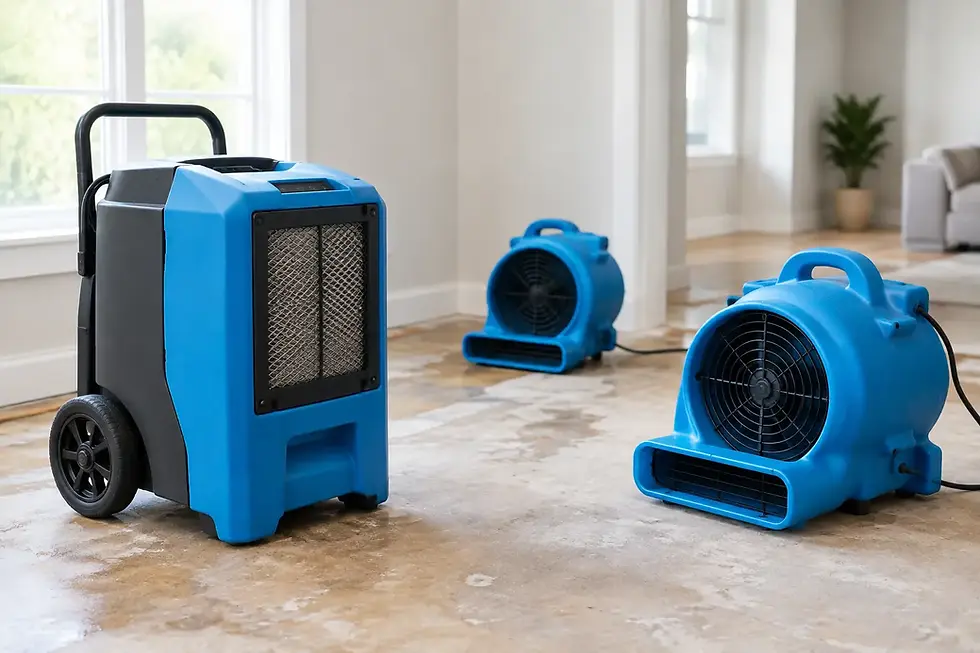
After extraction, drying equipment is placed strategically. Air movers increase evaporation, dehumidifiers remove moisture from the air, and containment may be used to control airflow and protect unaffected areas. Equipment placement is not a one-time task. It must be adjusted as moisture levels change.
Days 1 Through 3: Controlled Structural Drying
During the next several days, restoration work becomes more technical. The property may feel less humid and the floor may look dry, but drying is not complete until materials reach acceptable moisture targets. Technicians should monitor humidity, temperature, and moisture content in framing, drywall, flooring, and other affected building components.
This is also when hidden problems become clearer. Wood floors can cup or separate, drywall can soften, and cabinetry can swell as absorbed moisture moves through the material. In some cases, controlled drying can stabilize and save these components. In others, removal prevents future mold growth, odors, and structural deterioration.
Avoid turning drying equipment off early because it is noisy or inconvenient. Dehumidifiers and air movers are working to remove moisture that has migrated into the structure. Interrupting the drying process can extend the timeline and increase the chance that moisture remains behind finished surfaces.
For landlords, property managers, and business owners, this stage also requires clear communication. Keep records of affected units or work areas, business contents, equipment, and interruption-related losses. If an area must remain closed, professional documentation helps establish what was affected and what work was needed to restore it.
Days 3 Through 7: Verification and Repair Planning
By day three to seven, many clean-water losses can be dry or close to dry, although larger floods, dense materials, cold weather, and extensive saturation may require longer. A finished lower level with wet insulation and flooring will take more work than a small leak on a tile floor. Sewage backups and contaminated floodwater also require additional cleaning and disinfection before reconstruction can begin.
Drying should be verified with moisture readings, not guesswork. Once affected materials are dry and the area has been cleaned, the restoration team can determine what needs repair or replacement. That may include drywall, insulation, trim, flooring, cabinets, doors, paint, or sections of damaged framing.
This is where a full-service restoration provider can reduce delays. Instead of leaving you with a dry but unfinished property, the same team can help coordinate the transition from emergency mitigation to reconstruction. That continuity matters when you are trying to reopen a business, prepare a rental unit, or make your home livable again.
Do not rush to install new finishes before the structure is confirmed dry. New flooring, insulation, or drywall can trap moisture if installed too soon. A short delay for proper verification is usually less costly than tearing out recently completed repairs after odor, mold, or material failure develops.
What You Can Do While Help Is on the Way
If the area is safe and the water is clean, move lightweight belongings, photos, electronics, and furniture out of the affected area. Place aluminum foil or plastic blocks under furniture legs to reduce staining and moisture transfer. Open interior doors to improve access, but do not open windows during humid or rainy weather if it will add moisture to the space.
Avoid handling sewage-contaminated belongings without proper protective equipment. Do not use fans on contaminated water, as they can spread particles to other areas. Do not discard damaged materials until they have been photographed and your insurance carrier has been notified, unless removal is necessary to protect health and prevent additional damage.
When the Timeline Needs to Move Faster
Every flood should be treated seriously, but immediate professional intervention is especially necessary when water has reached electrical components, has soaked multiple rooms, entered wall cavities, affected hardwood or laminate flooring, or came from a sewer, toilet, drain, river, or storm runoff. The same is true when a building has vulnerable occupants, such as children, older adults, tenants, customers, or employees.
A slow response can turn a manageable water loss into a more expensive cleanup. It can also delay insurance decisions and reconstruction. Fast action does not mean cutting corners. It means getting qualified help in place early enough to protect what can be saved and remove what cannot.
If your property is still wet, the best next step is simple: keep people out of unsafe areas, document the damage, and arrange emergency cleanup as soon as possible. The sooner drying begins, the better your chances of returning the property to a safe, stable condition.


Comments