.png)


Structural Drying After Flooding Saves Your Home
A flooded basement, burst pipe, or storm-related leak can leave a property looking dry long before it is actually safe. Structural drying after flooding is the controlled process of removing moisture from building materials before it causes mold growth, wood damage, odors, and costly reconstruction. Fast action matters because water does not stay where it first appears. It travels under flooring, into wall cavities, behind cabinets, and through insulation.
For homeowners and business owners in eastern Wisconsin, the goal is not simply to remove water. The goal is to return the property to a safe, stable pre-loss condition with clear documentation for the insurance claim and a plan for any required repairs.
Why Floodwater Causes Damage After Cleanup
Standing water is the most visible problem, but hidden moisture often creates the longer-term damage. Drywall can absorb water several inches or feet above the visible water line. Wood framing may swell or warp. Carpet padding can hold moisture against subflooring, while wet insulation loses its effectiveness and can trap contamination inside a wall.
Materials also dry at different speeds. A hard surface floor may feel dry underfoot while the wood subfloor beneath it remains wet. A finished basement wall may look normal even though insulation and framing behind it are saturated. Without proper moisture testing, it is easy to stop cleanup too early.
In many cases, mold can begin growing within 24 to 48 hours when moisture, organic material, and indoor temperatures allow it. That does not mean every wet surface will become a mold problem, but it does mean delays increase the risk. Professional drying is designed to reduce that risk by finding moisture, removing damaged materials when necessary, and verifying that the structure has reached an appropriate drying standard.
What Structural Drying After Flooding Involves
Effective drying is not a matter of placing a few fans in a room and hoping for the best. A trained restoration team evaluates the source of water, the affected materials, and the category of water involved before setting up equipment.
Water extraction comes first
The first priority is removing standing water as quickly as possible. Extraction equipment removes water from floors, carpets, pads, and other affected surfaces. Faster extraction usually means less water has time to migrate into walls, framing, and lower levels of the structure.
Carpet and padding are assessed separately. In some clean-water losses, carpet may be saved if extraction and drying begin quickly. Padding often needs removal because it holds water and does not dry reliably in place. If water came from a sewage backup, outdoor flooding, or another contaminated source, porous materials may need to be removed for safety.
Moisture inspection identifies what cannot be seen
Restoration professionals use moisture meters, thermal imaging, and humidity readings to identify wet materials and establish drying targets. These readings matter because visual inspection alone cannot show whether water is behind a wall, beneath a floor, or inside a ceiling assembly.
The inspection also helps determine how much demolition is necessary. Removing every affected wall or floor is not always the right answer. On the other hand, trying to dry materials that cannot be safely or effectively dried can extend the project and create future problems. The right approach depends on the material, how long it was wet, the water source, and whether contamination is present.
Air movement, dehumidification, and temperature control work together
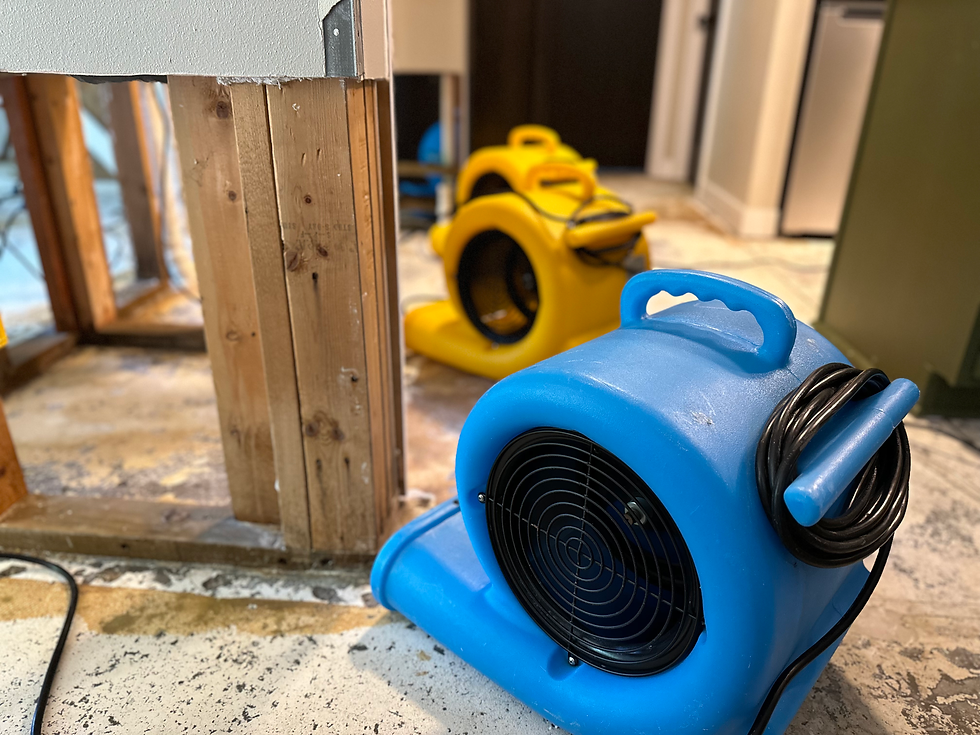
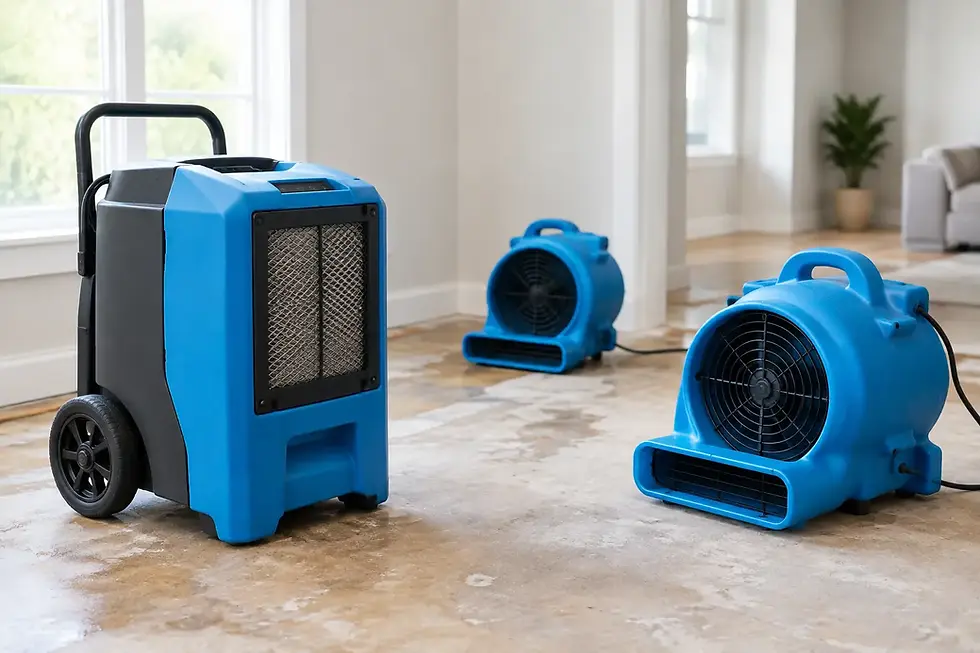
Once water is extracted and affected areas are opened as needed, drying equipment is placed strategically. Air movers increase evaporation from wet surfaces. Commercial dehumidifiers remove that moisture from the air. Proper temperature and airflow help keep the drying process moving.
Equipment placement is based on measurements, not guesswork. Too little dehumidification can leave humidity high and slow progress. Too much airflow in the wrong place can be ineffective or spread dust and contaminants. When sewage, mold, or other potentially hazardous materials are involved, containment and air filtration may be required before drying begins.
Daily monitoring confirms progress
Drying equipment must be monitored and adjusted as conditions change. A restoration team checks moisture levels, relative humidity, and material conditions throughout the process. This documentation shows whether drying is progressing properly and helps support the insurance claim.
A typical drying project may take several days, though the timeline varies. A small clean-water leak caught early may dry quickly. Flooding that reached finished walls, wood flooring, insulation, or multiple rooms can take longer and may require selective removal of materials before drying can be completed.
When Materials Can Be Saved and When They Need Removal
Property owners understandably want to preserve as much as possible. In many situations, that is possible. Solid wood framing, concrete, tile, and some nonporous surfaces can often be cleaned and dried successfully. However, materials that absorb water readily may require removal, especially after contaminated water exposure.
Drywall may sometimes be dried if the loss was clean water, the area was addressed immediately, and readings show the material is responding. Wet insulation is more likely to need replacement because it can hold moisture, lose performance, and create concealed problems. Laminate flooring often swells once water reaches its core, while some hardwood floors may be dried and repaired depending on the extent of moisture and cupping.
There is no responsible one-size-fits-all answer. The least disruptive option is not always the safest option, and the fastest-looking cleanup is not always the most complete one. Proper testing lets the restoration plan follow the actual condition of the property.
Do Not Overlook Water Categories
The source of the water affects every decision that follows. Clean water from a supply line is handled differently from water containing bacteria, sewage, chemicals, or outdoor contaminants.
A toilet overflow involving waste, a sewer backup, or stormwater that entered a basement should be treated seriously. These losses may require removal of porous contents and building materials, cleaning and disinfection of salvageable surfaces, and appropriate protective measures for anyone entering the area. Do not run household fans in a contaminated area or attempt to dry sewage-soaked carpet yourself.
If the source is unknown, assume caution until a professional assessment confirms the conditions. Safety comes before saving a wall, floor, or piece of furniture.
Steps to Take Before Help Arrives
If it is safe to do so, stop the water source. Shut off the main water supply for a broken pipe, or move belongings away from the affected area. Turn off electricity to wet areas only if it can be done safely from a dry location. Never enter standing water near electrical outlets, appliances, or damaged wiring.
Take photos and videos before moving major items when possible. This can help document the loss for your insurer. Avoid walking through contaminated water, and do not remove wet ceiling materials if the ceiling appears sagging or unstable.
Then call a restoration company that can respond quickly, inspect the full extent of the damage, and document the mitigation work. Early professional help is particularly valuable when water has reached finished basements, walls, wood floors, commercial spaces, or areas with sewage exposure.
Insurance Documentation Is Part of the Job
Flooding creates enough stress without trying to translate moisture readings, equipment logs, and damaged-material decisions for an insurance carrier. Detailed documentation can help establish what happened, what was affected, and why drying or removal was necessary.
Keep records of the date and time of the loss, the likely source, photos, communications with your insurer, and any emergency steps taken. A restoration contractor should also provide clear estimates and drying documentation. Lakeshore Restoration LLC helps property owners navigate this stage while managing the work from emergency mitigation through repairs and reconstruction when needed.
Call Before Hidden Moisture Becomes a Bigger Repair
A room that looks dry is not necessarily dry behind the walls or under the floor. If your home, rental property, or business has experienced flooding, a quick moisture assessment can prevent a manageable water loss from becoming a larger mold, odor, or structural repair. Acting early gives you more options, protects the building, and helps restore the space with confidence.


Comments