.png)


Water Mitigation vs Restoration Explained
A pipe bursts at 2 a.m., water spreads under flooring, and the ceiling below starts to stain. In that moment, the difference between water mitigation vs restoration is not technical jargon - it affects how quickly damage is controlled, how much material can be saved, and how soon your property can return to normal.
Many property owners use these terms interchangeably. That is understandable, but they are not the same job. Mitigation is the emergency response that stops the damage from getting worse. Restoration is the repair and rebuilding work that brings the property back to its pre-loss condition. Most serious water losses require both, and the order matters.

Water mitigation vs restoration: what is the difference?
Water mitigation is the first phase. Its purpose is to reduce immediate damage, remove standing water, begin drying, and stabilize the structure. If water is still entering the property, mitigation also includes stopping the source when possible or coordinating that next step quickly.
Restoration comes after stabilization. It focuses on repairing or replacing damaged materials and returning the home or building to safe, functional use. That can include drywall replacement, flooring installation, painting, trim work, and even full reconstruction in severe losses.
A simple way to think about it is this: mitigation prevents additional loss, while restoration repairs the loss that already happened.
That difference may sound straightforward, but in real emergencies, the two often overlap. Drywall may need to be opened during mitigation so hidden moisture can escape. Demolition may be part of stabilization, but rebuilding does not start until moisture readings show the structure is actually dry.
What water mitigation usually includes
When water damage first happens, the clock is working against the property. Water travels fast into subfloors, wall cavities, insulation, cabinetry, and contents. The longer it sits, the higher the risk of swelling, warping, microbial growth, and contamination.
Mitigation work is built around speed and control. A professional crew typically starts by inspecting the affected areas, identifying the water source, and assessing the category of water involved. Clean water from a supply line is treated differently than gray water from an appliance overflow or black water from sewage backup.
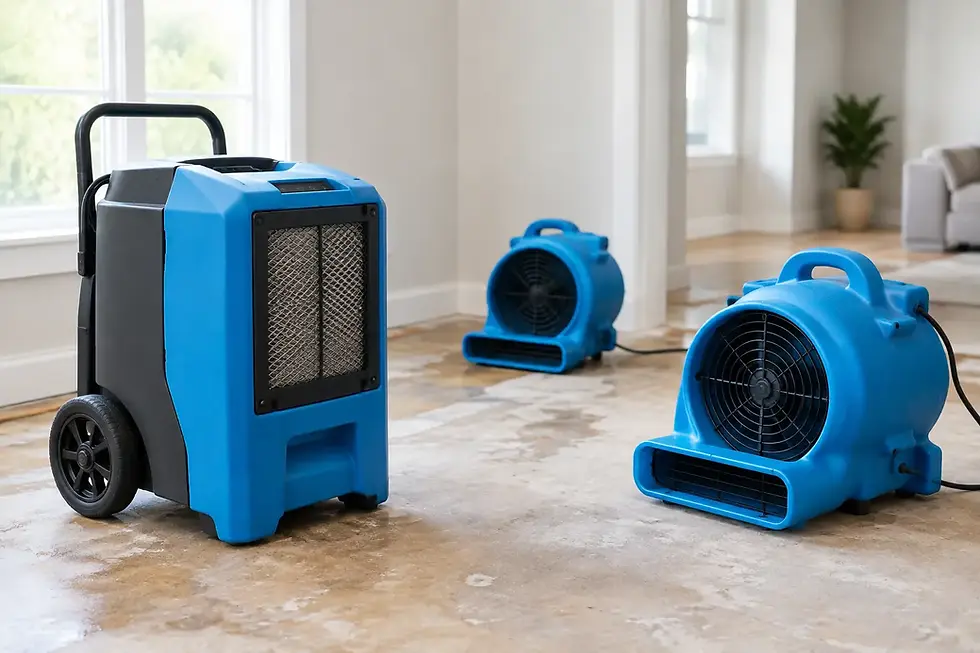
From there, mitigation may include water extraction, removal of unsalvageable materials, setting drying equipment, moisture mapping, temperature and humidity control, and documentation for insurance. In some cases, contents are moved or protected so the affected area can dry properly.
This stage is less about making the property look normal again and more about preventing hidden damage from turning into a larger structural and indoor air quality problem.
What restoration usually includes
Once the property has been dried and stabilized, restoration begins. This is the part most owners think of first because it is what brings the space back to usable condition.
Restoration may be minor or extensive depending on the loss. In a smaller event, it could mean reinstalling baseboards, patching drywall, and replacing one section of flooring. In a larger commercial or residential loss, it might involve rebuilding wall assemblies, replacing cabinets, reconstructing ceilings, and performing finish work throughout multiple rooms.
Good restoration is not cosmetic patchwork. It should account for what was removed during mitigation, what materials can be matched, and what is needed to restore the property safely and correctly. That is one reason many owners prefer a company that can handle both phases instead of handing the job off after drying is complete.
Why property owners get confused
The confusion usually comes from how water damage jobs unfold in real life. When crews arrive, they may extract water, remove wet drywall, pull up affected flooring, place air movers and dehumidifiers, and start planning repairs. To the owner, it can all feel like one service call.
Operationally, though, these are different scopes. Mitigation is urgent and damage-control focused. Restoration is repair focused. Insurance carriers often separate them in documentation for the same reason. One addresses emergency stabilization, and the other addresses reconstruction.
That distinction matters when you are reviewing estimates, asking what happens next, or trying to understand whether your contractor is only handling dry-out or can also complete the repairs.
Do you need mitigation, restoration, or both?
It depends on how far the water has spread, how long it was present, and what materials were affected. If the issue is caught very early and limited to a small area, mitigation may be enough. For example, a minor supply line leak caught quickly on a hard surface floor may only require extraction, drying, and monitoring.
But once water has soaked drywall, insulation, laminate, wood flooring, cabinets, or ceiling materials, restoration is usually part of the process. Materials may need to be removed during mitigation and replaced later. Even when items appear dry on the surface, trapped moisture can remain behind walls or under flooring.
For Wisconsin property owners, this is especially important during colder months. Water losses from frozen pipes, ice dam issues, or heating system failures can affect multiple building assemblies at once. Quick mitigation can reduce the spread, but restoration is often necessary after the structure is stabilized.
Why fast mitigation changes the outcome
The biggest cost driver in many water losses is not the initial leak. It is the delay. A slow response allows water to migrate farther, absorb deeper into materials, and create conditions for mold growth and structural deterioration.
Fast mitigation can sometimes save flooring, reduce demolition, shorten drying time, and limit business interruption. It also helps create a cleaner insurance file because moisture readings, equipment logs, photos, and damage documentation are captured early.
That does not mean every material can be saved. Some porous materials lose integrity quickly, and contaminated water introduces health risks that change the plan immediately. But early action gives the best chance of preserving what can be preserved.
The role of moisture testing and professional drying
One common mistake after a water loss is assuming the job is done when visible water is gone. That is not enough. Moisture can remain in framing, subfloors, insulation, and wall cavities long after surfaces look dry.
Professional mitigation relies on moisture meters, thermal imaging in some cases, and repeat monitoring to verify drying progress. Equipment placement is adjusted based on actual conditions, not guesswork. If drying is rushed or incomplete, restoration work can fail later. Paint can blister, flooring can cup, and odors or microbial issues can develop behind finished surfaces.
This is where certified expertise matters. Drying a structure correctly is a technical process, not just a matter of setting fans and hoping for the best.
Why one company handling both phases can help
There is a practical advantage to working with a contractor that manages mitigation and restoration under one roof. Communication tends to be clearer, timelines are easier to manage, and there is less risk of finger-pointing between separate vendors.
The mitigation team already knows what was affected, what was removed, how long drying took, and what documentation was collected. That information carries directly into the repair plan. It also helps with insurance coordination because the scope from emergency response through rebuild is more consistent.
For homeowners, landlords, and business owners, that means fewer moving parts during a stressful situation. Lakeshore Restoration LLC approaches water losses this way because emergency cleanup and final repairs are connected from the start, not treated like unrelated jobs.
Questions to ask before approving water damage work
If you are comparing contractors after a water loss, ask whether they are providing mitigation only or full restoration as well. Ask how they document moisture, what materials may need to be removed, and what the next phase looks like once drying is complete.
You should also ask who communicates with insurance, whether estimates include reconstruction, and how they determine when the structure is ready for repairs. A dependable contractor should be able to explain the sequence clearly and give you a realistic picture of what can be saved, what cannot, and why.
That clarity matters because water damage work is rarely one-size-fits-all. A clean-water loss in a laundry room is very different from a sewage backup in a finished basement or a sprinkler discharge in a commercial property.
The bottom line on water mitigation vs restoration
If you remember one thing, make it this: mitigation is the emergency step that limits damage, and restoration is the repair step that puts the property back together. One protects the structure from getting worse. The other makes it whole again.
When water enters a home or business, waiting to sort out the terminology is not the priority. Getting qualified help on site is. The right team can stop the spread, dry the structure properly, document the loss, and guide the repairs without leaving you to manage the handoff alone. In water damage, the best results usually come from the fastest informed response.


Comments