.png)


Wet Carpet Salvage Guide for Water Damage
- Lakeshore Restoration LLC
- Aug 8
- 5 min read
A wet carpet can look like a manageable cleanup job for the first few hours. Then the odor appears, the padding stays damp, and moisture begins moving into baseboards, subfloors, and nearby walls. This wet carpet salvage guide explains what to do first, when carpet may be saved, and when professional water damage restoration is the safer choice.
The priority is not making the carpet look dry. It is removing water quickly, controlling contamination, and verifying that the carpet system and surrounding structure are actually dry. In eastern Wisconsin, where basement leaks, frozen-pipe breaks, appliance failures, and heavy rain can create sudden water problems, a fast response can make a major difference in the final repair cost.
Start With Safety and Stop the Water Source
Before moving furniture or setting up fans, make sure the area is safe to enter. Turn off electricity to the affected area if water is near outlets, power strips, appliances, or the electrical panel. Do not walk through standing water if there is any concern that electricity is present.
Next, stop the source if possible. Shut off the water supply for a broken pipe or appliance line. Place a container under an active drip. If stormwater is entering through a foundation opening, move belongings away from the area and limit additional water exposure until the intrusion can be addressed.
Water type matters just as much as how much water is present. Clean water from a broken supply line may allow for carpet salvage if extraction and drying begin immediately. Water from a washing machine, dishwasher, toilet overflow without sewage, or other used-water source has a higher contamination risk. Sewage, drain backup, floodwater, or water that has traveled through unsanitary areas should be treated as contaminated. Do not attempt to save carpet exposed to sewage or floodwater. It typically requires removal and specialized cleanup to protect occupants and prevent bacterial contamination.
Document the Damage Before Cleanup Begins
Take clear photos and short videos of the affected rooms before items are moved. Capture the source of the water, the wet carpet, furniture, baseboards, and any visible damage to walls or belongings. If you have a moisture meter, record the areas that are wet, but do not delay extraction just to gather more documentation.
Notify your insurance carrier as soon as practical. A restoration company can also provide photographs, moisture readings, drying records, and an itemized scope of work that supports your claim. Keep damaged materials until your adjuster or restoration professional advises otherwise, except where contaminated materials create an immediate health concern.
Remove Water, Not Just Surface Moisture
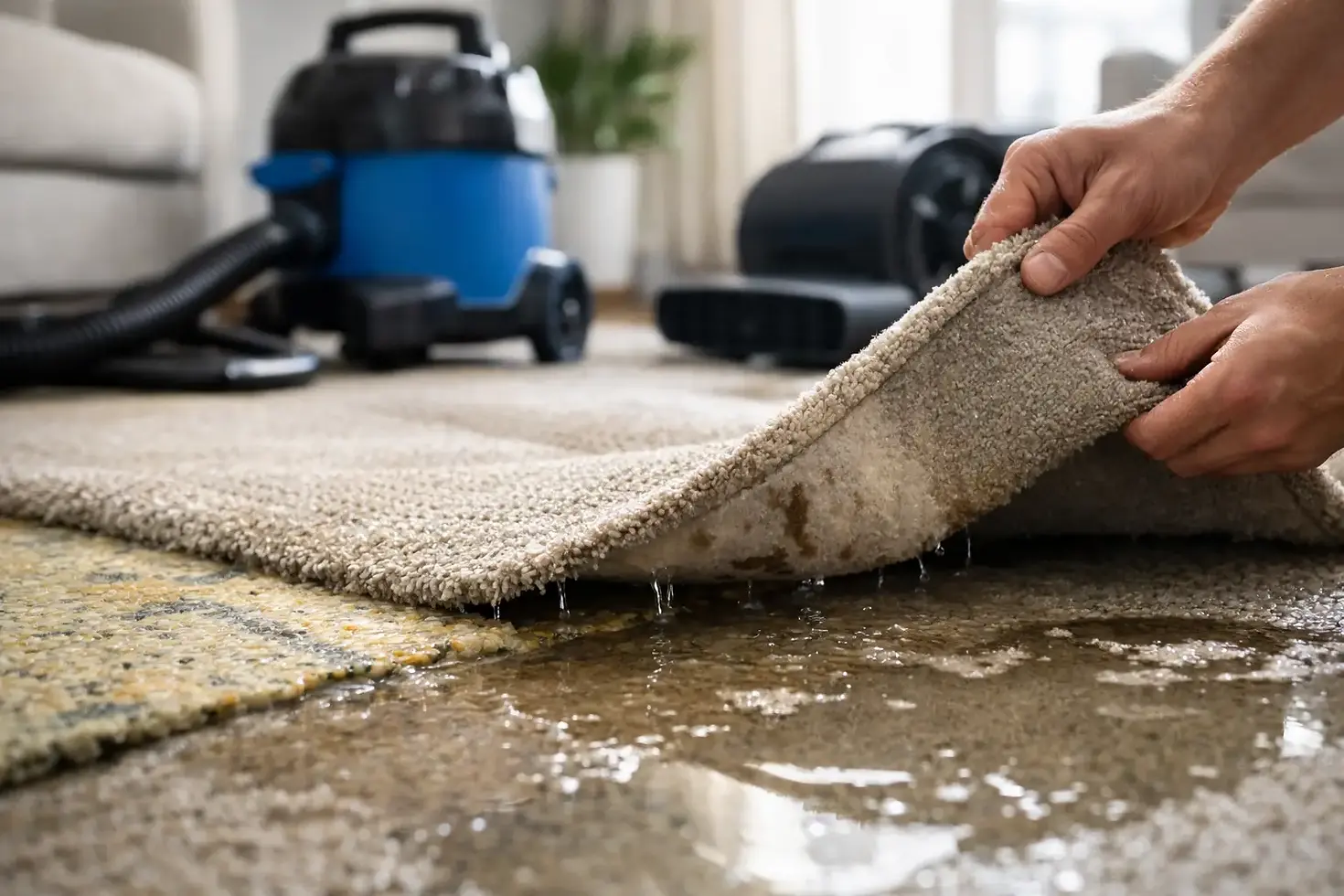
Towels and household fans can help with a small spill, but they are rarely enough for a soaked room. Carpet acts like a sponge, and the pad beneath it can hold a significant amount of water. Water may also wick several inches beyond the visible wet area.
Use a wet vacuum or extraction equipment to remove as much water as possible. Work slowly and make repeated passes. Avoid a regular household vacuum, which is not designed for water and can create an electrical hazard. Move lightweight furniture out of the room, and place foil, plastic blocks, or protective tabs beneath furniture legs that cannot be moved right away to reduce staining and wood damage.
If a large section of carpet is wet, professionals may lift the carpet from the tack strip and inspect the pad and subfloor. This is not simply a cosmetic step. Lifting allows technicians to determine whether the pad can dry, whether water is trapped below the carpet, and whether the subfloor has absorbed moisture.
When Can Wet Carpet Be Saved?
Carpet salvage depends on the water category, the length of exposure, the extent of saturation, and the materials beneath it. A small clean-water leak caught quickly may be dried successfully. A fully saturated basement carpet after a prolonged leak may require more extensive mitigation, even if the carpet still looks acceptable.
Carpet has the best chance of being saved when the water is clean, the affected area is addressed within 24 to 48 hours, and the backing, pad, and subfloor can be dried to appropriate moisture levels. The carpet must also be free of odor, visible mold growth, delamination, and permanent staining.
Padding is often the deciding factor. Standard carpet pad compresses easily and retains water, making complete drying difficult. In many clean-water losses, replacing the pad while drying and reinstalling the carpet is the more reliable option. Carpet installed over a concrete basement floor may dry differently than carpet over wood framing, so the correct approach depends on the construction of the property.
Carpet should generally be removed when any of these conditions apply:
It was exposed to sewage, floodwater, or other contaminated water.
It remained wet for more than 48 hours or has developed a musty odor.
Mold growth is visible on the carpet backing, pad, baseboards, or nearby walls.
The backing has separated, the carpet is permanently stained, or the pad cannot be effectively dried.
Trying to keep contaminated or mold-affected carpet can create a larger indoor air quality problem later. The cost of removal is often lower than the cost of repeated odor treatment, mold remediation, and repairs after hidden moisture spreads.
Dry the Room With Controlled Equipment
Opening windows and running fans may be helpful during dry weather, but uncontrolled airflow is not a complete drying plan. Wisconsin humidity, rain, and cold outdoor temperatures can make open windows less effective or even introduce more moisture. The goal is controlled drying with enough air movement, dehumidification, and monitoring to remove moisture from the carpet, pad, floor, and surrounding materials.
Professional restoration equipment usually includes high-capacity air movers, commercial dehumidifiers, air scrubbers when needed, and moisture detection tools. Technicians take readings from materials that are not visibly wet, including lower wall sections, trim, subfloors, and adjacent rooms. This matters because water can travel beneath flooring or behind baseboards without creating an obvious stain.
Do not turn up the heat and assume the problem is solved. Heat can speed evaporation, but without proper dehumidification, moisture simply moves into the air and may condense elsewhere in the property. Controlled drying balances temperature, humidity, and airflow until materials reach an acceptable dry standard.
Watch for Hidden Moisture and Mold Risks
Mold can begin growing within 24 to 48 hours under the right conditions. That does not mean every wet carpet will become moldy, but it does mean waiting several days to begin drying is a risky decision. A musty smell, recurring dampness, buckled flooring, peeling paint, or discoloration along baseboards can indicate moisture remains behind finished surfaces.
Property owners should also pay attention to what is under and around the carpet. In a finished basement, water may affect drywall, insulation, wood framing, and stored contents. In a commercial setting, water can spread beneath carpet tiles, into offices, under shelving, and through shared wall assemblies. Fast mitigation helps limit downtime and prevents a smaller incident from becoming a reconstruction project.
When to Call a Certified Restoration Team
Call for professional help immediately if water covers more than a small isolated area, the source is uncertain, the carpet is soaked through, or the water is contaminated. You should also call if the damage occurred overnight, while you were away, or after a storm, because the actual drying time may be longer than it appears.
Lakeshore Restoration LLC provides 24/7 water damage response for homeowners, landlords, property managers, and businesses in Two Rivers, Manitowoc, Sheboygan, Green Bay, and nearby communities. Certified technicians can assess the water category, extract standing water, remove unsalvageable materials, set drying equipment, document conditions for insurance, and manage repairs after mitigation is complete.
Do not wait for a wet carpet to become an odor, mold, or structural damage problem. Protect the area, stop the water if you can, and get the affected materials evaluated while salvage is still possible.


Comments