.png)


When Is Water Damage Dangerous in Your Home?
A puddle around a dishwasher may look manageable. Water spreading from a burst pipe into walls, flooring, or electrical outlets is a different kind of emergency. When is water damage dangerous? The answer depends on where the water came from, what materials it has reached, how long it has been present, and whether it creates an electrical, structural, or contamination risk.
For Wisconsin property owners, the safest approach is to treat unknown water as urgent until it has been assessed. Fast extraction and professional drying can often prevent a smaller loss from turning into mold growth, damaged framing, unsafe air quality, or a major reconstruction project.
When Is Water Damage Dangerous Right Away?
Water damage becomes immediately dangerous when electricity, sewage, contaminated floodwater, or building instability is involved. In these situations, protecting people comes before moving furniture, pulling up carpet, or trying to clean the area.
If water is near outlets, appliances, a breaker panel, extension cords, or light fixtures, do not walk into the affected area unless you can safely shut off power from a dry location. Standing water can carry electrical current, and wet electrical components may remain hazardous even after the visible water is gone. A qualified professional should inspect affected wiring and equipment before it is used again.
Water from a toilet overflow containing waste, a backed-up sewer line, a broken septic system, or outside flooding should also be treated as contaminated. This is often called Category 3 water, or black water. It can contain bacteria, viruses, parasites, chemicals, and other contaminants that should not be handled without the proper protective equipment and cleaning process.
Structural safety is another concern. A ceiling that is sagging, bulging, or dripping can collapse under the weight of trapped water. Wet drywall can weaken quickly, while soaked insulation and ceiling materials add significant weight. Keep people out of the area below a damaged ceiling and avoid opening it yourself unless the area has been made safe.
The Source of the Water Changes the Risk
Not all water losses start with the same level of danger. A clean-water supply line leak may begin as a lower-contamination event, but that does not mean it is harmless. Water that sits for too long can absorb dirt, microbes, and materials from the building. Once clean water has soaked carpet padding, drywall, insulation, or wood flooring, removal and controlled drying may be necessary.
Gray water comes from sources such as washing machines, dishwashers, showers, and some sink overflows. It may contain detergents, food residue, or other contaminants. It is generally more hazardous than a clean supply-line leak, particularly if it has been sitting or has spread into porous materials.
Black water is the highest-risk category. Sewage backups, toilet overflows with solid waste, and floodwater from rivers, streets, or storm drains require specialized cleanup. Porous materials such as carpeting, padding, upholstered furniture, insulation, and some drywall may not be safely salvageable after black-water exposure.
The source can be deceptive. A basement flooded after heavy rain may contain runoff from lawns, streets, drains, and sewage systems. Water that appears clear is not automatically safe to touch, especially when it enters from outside.
Time Makes Water Damage More Serious
The first 24 to 48 hours are critical. During that window, water can wick upward through drywall, spread beneath flooring, soak insulation, and enter wall cavities where it cannot be seen. A fan pointed at a wet surface may dry the top layer while leaving the materials below wet enough to support mold growth.
Mold can begin developing in damp conditions within as little as 24 to 48 hours. That does not mean every wet surface will immediately become a major mold problem, but it does mean delay increases the risk. Materials that stay wet, especially paper-faced drywall, carpet backing, wood, and cellulose insulation, give mold a place to grow.
The longer moisture remains, the more likely the damage will move beyond simple cleanup. Hardwood flooring can cup or buckle. Laminate flooring may swell at the seams. Cabinets can delaminate. Drywall can soften and crumble. Wood framing may retain moisture long after surfaces feel dry, which is why moisture readings matter more than appearance alone.
Signs Water Damage May Be Unsafe to Ignore
Some water damage is obvious, but hidden moisture often creates the more expensive and unhealthy problem. A musty odor, peeling paint, new staining, warped trim, or flooring that feels soft underfoot can all point to moisture behind finished surfaces.
Pay close attention if you notice discoloration that continues to spread after a leak has been stopped. That may mean water remains inside the ceiling or wall. Brown rings on a ceiling, bubbling paint, and swollen baseboards are not merely cosmetic concerns. They can indicate that building materials are holding moisture and deteriorating.
Visible mold growth is another warning sign, particularly if it appears after a plumbing leak, roof leak, basement seepage, or appliance failure. Small surface growth may be limited, but visible mold can also be the outward sign of a larger moisture issue behind drywall, under flooring, or inside a cabinet wall. Scrubbing the visible spot without correcting the moisture source does not solve the underlying problem.
Odors deserve attention as well. A damp, earthy smell can develop before mold is visible. Sewer-like odors after a backup may indicate contamination remains in flooring, drains, or wall cavities. If occupants experience coughing, throat irritation, headaches, or worsening allergies only when they are in the affected area, limit exposure and arrange an inspection.
What to Do During the First Hours
Once everyone is safe, quick decisions can protect the property and simplify the insurance claim. Take photographs and short videos of the source, standing water, damaged belongings, and affected rooms before major cleanup begins, if it is safe to do so. Then stop the water source if possible, such as shutting off a fixture valve or the main water supply.
For a clean-water leak with no electrical or contamination concern, move dry belongings away from the wet area and remove excess water only if you can do so safely. Do not use a household vacuum on standing water. Avoid lifting saturated carpet or opening walls before the loss has been documented and evaluated, since improper removal can spread contamination or create unnecessary damage.
For sewage, floodwater, extensive water spread, or water that has reached walls and floors, keep people and pets out of the area. Do not run central HVAC equipment if the system may pull contaminated air or moisture through the property. If water is near electrical equipment, leave the area and contact emergency professionals.
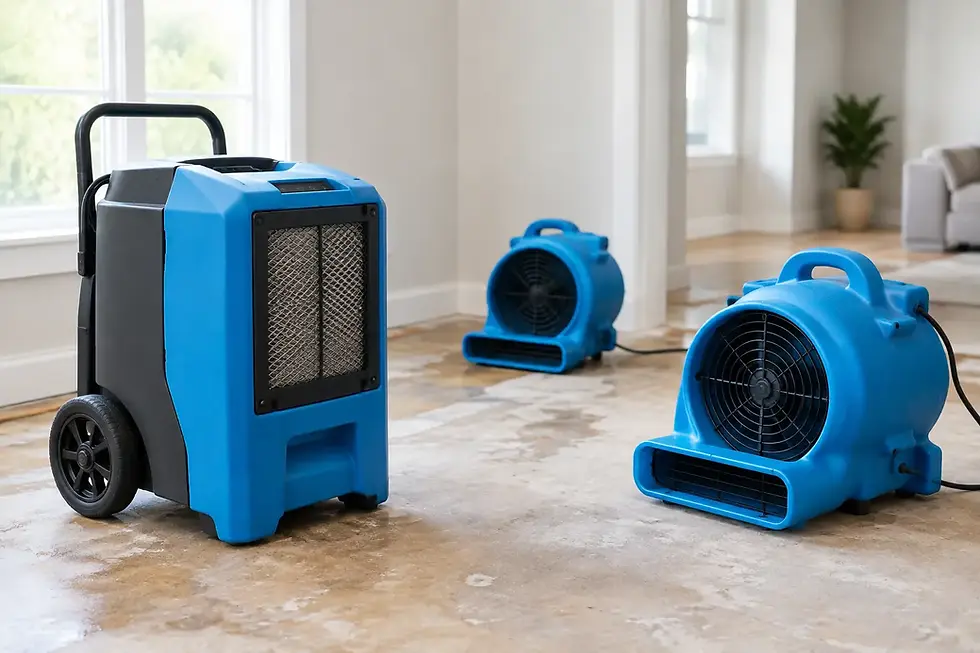
A professional restoration team uses moisture meters, thermal imaging where appropriate, commercial extraction equipment, air movers, dehumidifiers, and controlled drying procedures to address moisture that ordinary fans cannot reach. Documentation of the affected areas, drying conditions, and damaged materials can also help support an insurance claim.
Why Professional Drying Is Different From Waiting It Out
A room can look dry while moisture remains trapped below the surface. This is especially common with carpet and padding, vinyl flooring, hardwood, cabinetry, drywall, and insulated exterior walls. Drying a structure properly requires balancing airflow, humidity, temperature, and containment so materials dry without spreading contaminants or causing additional damage.
There are trade-offs. In some clean-water losses caught immediately, focused drying may save flooring, drywall, and contents. In a sewage backup or a long-standing leak with mold growth, removing unsalvageable porous materials may be the safer choice. The right decision comes from the source of the water, the extent of the spread, and verified moisture conditions, not from a quick visual inspection.
Lakeshore Restoration LLC provides 24/7 emergency response for homeowners, landlords, property managers, and businesses across eastern Wisconsin, with certified mitigation, cleanup, insurance documentation support, and reconstruction when repairs are needed.
Do Not Wait for a Small Leak to Become a Major Loss
Water damage is dangerous when it threatens electrical safety, exposes people to contaminated water, weakens building materials, or stays hidden long enough to create mold and indoor air quality concerns. Even if the immediate emergency has passed, a wet wall, damp basement, or stained ceiling still needs a timely assessment.
If you are unsure whether water reached hidden materials, act while the damage is still easier to control. A prompt inspection can provide clarity, protect the people using the property, and give the building its best chance of returning to a safe, dry condition.


Comments