.png)


Mold Fogging vs Removal: What Actually Works?
- Lakeshore Restoration LLC
- Aug 10
- 5 min read
A musty smell after a basement flood or a leak behind the wall can make any property owner want the fastest possible answer. That is why mold fogging vs removal is a common question. Fogging may reduce airborne particles and odors in the right conditions, but it does not remove mold growth from wet drywall, framing, insulation, carpet, or other affected materials.
For homes and businesses in eastern Wisconsin, the safest decision starts with finding the moisture source and determining how far the contamination has spread. A proper remediation plan addresses the cause, contains the affected area, removes or cleans contaminated materials, and verifies the property is dry before repairs begin.
Mold Fogging vs Removal: The Core Difference
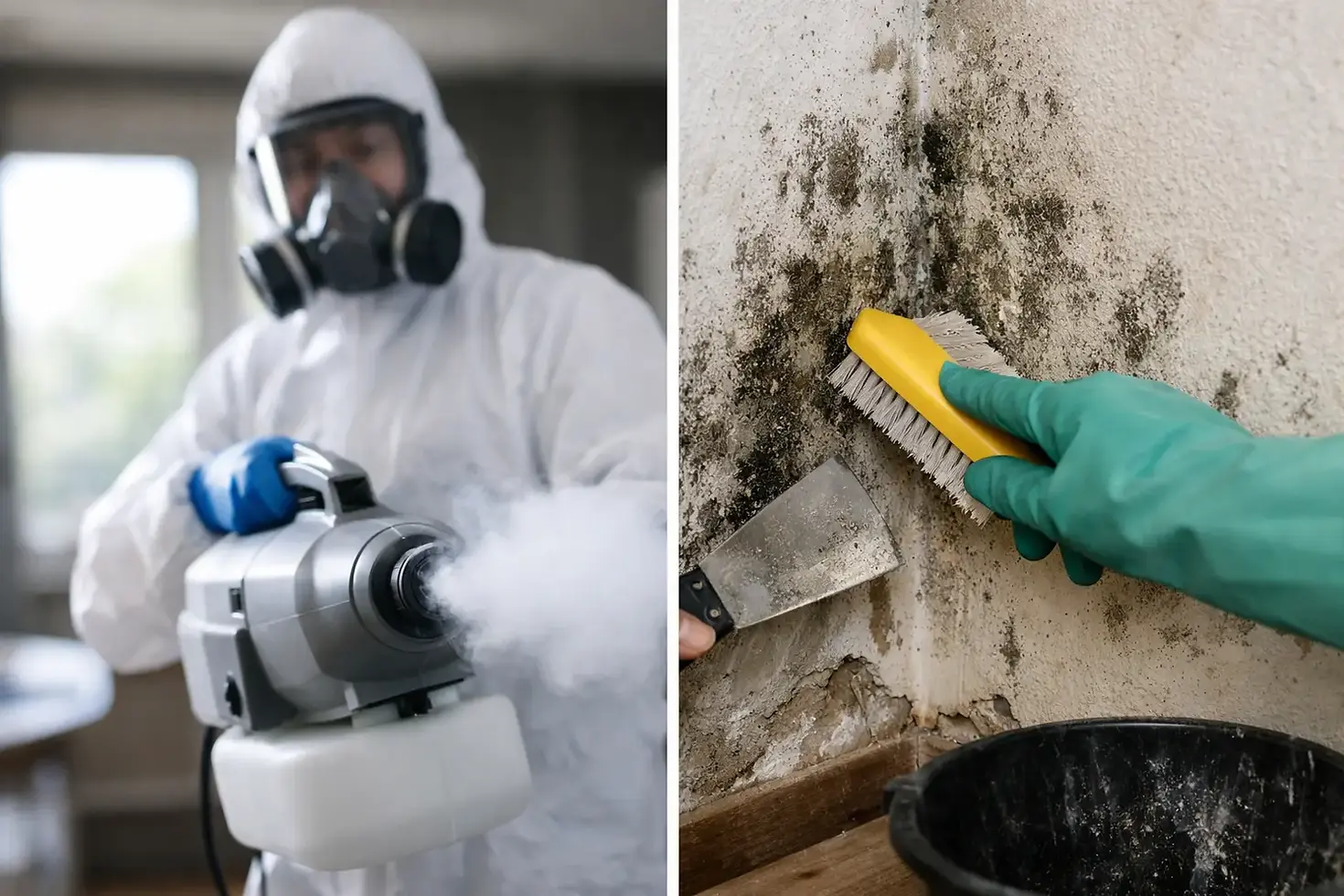
Mold fogging uses a machine to disperse a fine mist of antimicrobial, disinfecting, deodorizing, or encapsulating product into the air and onto exposed surfaces. Depending on the product and application, it can be useful as a supplemental treatment after cleaning and removal work is complete. It may also help treat hard-to-reach surfaces within a properly contained work area.
Mold removal, more accurately called mold remediation, is the process of correcting the conditions that allowed mold to grow and physically addressing the contamination. That can include removing water-damaged materials, HEPA vacuuming, detailed cleaning, controlled demolition, drying structural components, and repairing the leak or moisture condition behind the problem.
The difference matters because mold is not simply an odor or an air-quality issue. It is a living growth on a material. If colonies remain on damp drywall paper, wood, carpet backing, insulation, or stored contents, spraying or fogging over them may leave the underlying problem in place.
A simple way to think about it: fogging can be one tool in a remediation project. It is not a substitute for the remediation project itself.
Why Fogging Alone Often Fails
Fogging is appealing because it appears quick and noninvasive. A technician can treat a room without immediately opening walls or removing materials. However, mold often grows where a fog cannot reliably reach, including behind baseboards, inside wall cavities, under flooring, beneath cabinets, and within insulation.
Even when the fog contacts a visible surface, it cannot correct water damage. If a roof leak, plumbing leak, foundation seepage, condensation issue, or high indoor humidity remains unresolved, mold can return. The smell may improve temporarily while hidden growth continues.
There is also a difference between treating a surface and removing contamination. Porous materials can hold mold roots below the visible surface. In cases of substantial growth or prolonged moisture exposure, affected drywall, carpet padding, insulation, ceiling tile, or particleboard may need to be removed under proper containment. Structural lumber can often be cleaned and dried when addressed promptly, but the right approach depends on its condition and the extent of growth.
For occupied properties, using fogging as a shortcut can create another concern: chemical products must be selected and applied correctly. Residents, employees, pets, and sensitive equipment may need to stay out of the treatment area until it is safe to re-enter. A professional should follow product directions, containment procedures, and ventilation requirements rather than treating fogging as a one-size-fits-all solution.
When Mold Fogging Can Be Useful
Fogging is not automatically a bad service. It has a legitimate place when it supports a complete, controlled remediation plan. For example, after physical cleaning and removal have been performed, a properly chosen product may be applied to exposed framing or other remaining structural surfaces. It can also support odor control after the moisture source and contaminated materials have been addressed.
The timing is critical. Fogging should generally come after the source has been stopped, affected materials have been evaluated, the area has been cleaned, and drying is underway or complete. It should not be the first and only response to visible mold after a water loss.
In a small, surface-level situation on a nonporous material, cleanup may be relatively straightforward. In a larger situation, especially one involving wet building materials, repeated water intrusion, or a musty odor with no obvious source, an inspection is the better first step. The goal is to avoid both extremes: tearing out sound materials without evidence and relying on a surface treatment when hidden damage is present.
What Proper Mold Remediation Looks Like
A qualified remediation team begins by identifying where the moisture came from and whether it is still active. This may involve visual inspection, moisture readings, evaluating building materials, and checking nearby areas where water may have traveled. A bathroom leak on the second floor, for example, can affect the subfloor, ceiling below, wall cavities, and insulation before staining becomes visible.
Once the scope is understood, the crew establishes containment when needed. Containment helps keep dust and spores from moving into clean areas during demolition and cleaning. Air filtration equipment with HEPA filtration may be used to capture airborne particulates, while technicians use appropriate personal protective equipment for the conditions.
Then comes the physical work. Unsalvageable porous materials are removed and disposed of properly. Remaining surfaces are cleaned using methods suited to the material, such as HEPA vacuuming, damp wiping, or controlled abrasion where appropriate. The space is dried with professional equipment and monitored until moisture levels return to an acceptable range.
Finally, the original moisture problem must be repaired. That may mean fixing a plumbing line, repairing a roof opening, correcting drainage near the foundation, sealing a source of water intrusion, or improving ventilation in a high-humidity area. Once the remediation area is clean and dry, reconstruction can restore drywall, insulation, flooring, trim, and finishes.
This process is more involved than fogging, but it is designed to prevent the same issue from resurfacing behind a freshly painted wall or new flooring.
Signs You Need More Than a Fogging Treatment
Visible mold larger than a small isolated area deserves a professional evaluation, particularly when it follows a flood, sewage backup, long-term leak, or appliance failure. You should also be cautious if you notice recurring staining, peeling paint, warped flooring, soft drywall, persistent musty odors, or allergy-like symptoms that seem worse inside the building.
Property managers and business owners should act quickly when mold is near tenant spaces, customer areas, kitchens, storage rooms, or HVAC components. Delaying can expand the affected area, interrupt operations, and create more costly reconstruction later. A fast inspection provides the documentation needed to make informed repair decisions and, when applicable, support an insurance claim.
Do not disturb suspect mold by aggressively scrubbing, sanding, or tearing into wet materials without a plan. Those actions can spread particles into adjacent rooms and make the cleanup more difficult. If the affected area is hidden, opening a small area for investigation may be necessary, but it should be done with appropriate controls.
Choosing the Right Response for Your Property
The right solution depends on the materials involved, how long they were wet, whether growth is visible or hidden, and whether the moisture source has been corrected. A small issue caught early may need cleaning, drying, and a targeted repair. A larger or long-standing problem may require containment, material removal, air filtration, and reconstruction.
Ask any contractor what they will do beyond fogging. A clear answer should include how they will locate the moisture source, protect unaffected areas, determine what materials can be saved, dry the structure, and document the work. Be wary of anyone promising to eliminate a significant mold problem with a single spray treatment while ignoring the leak, humidity issue, or damaged building materials.
Lakeshore Restoration LLC provides certified, full-service help for mold concerns across Two Rivers, Manitowoc, Sheboygan, Green Bay, and surrounding communities. From inspection and containment through drying, remediation, insurance documentation, and reconstruction, the focus is on returning the property to a safe, stable condition rather than masking the symptoms.
If you can smell mold, see staining, or know that water entered your property, treat it as a moisture problem first. A timely professional assessment can tell you whether fogging has a limited supporting role or whether complete remediation is the safer path before damage spreads further.


Comments