


Air Quality Problems After Water or Fire Damage
A basement can look dry again while the air still tells a different story. Musty odors, throat irritation, lingering smoke, or a damp feeling in the building can all point to an air quality problem after property damage. For homeowners, landlords, and business owners, treating the visible mess is only part of the job. The materials, moisture, residue, and contaminants left behind can continue affecting the indoor environment long after the emergency.
Why Indoor Air Quality Changes After Property Damage
Indoor air quality is affected by what is present in the air and by what is trapped inside a structure. After a water loss, fire, sewage backup, mold issue, or biohazard event, those conditions can change quickly. Wet drywall, carpeting, insulation, and wood framing may support microbial growth if they are not dried correctly. Smoke residue can settle throughout a building and release odors when temperatures or humidity change. Sewage and other contaminated water can introduce bacteria and other hazardous materials into porous surfaces.
A fan and an open window may make a room feel better temporarily, but they do not remove the source of contamination. In some cases, improper cleanup spreads particles farther through the home or business. For example, disturbing mold-contaminated drywall without containment can release spores into adjacent rooms. Running a heating and cooling system after a fire can circulate smoke particles through ductwork.
The right response depends on the cause, how long materials were affected, and whether contamination reached hidden areas. That is why a careful inspection matters before repairs begin.
Air Quality After Water Damage
Water damage is one of the most common causes of indoor air concerns in Wisconsin properties. A burst pipe, roof leak, appliance failure, flooded basement, or ice dam can soak building materials well beyond what is visible on the surface. Moisture can travel behind baseboards, under flooring, into wall cavities, and through insulation.
When drying is delayed or incomplete, mold can begin growing on damp materials. Mold does not always appear as a dramatic black patch on a wall. It may be hidden behind cabinets, beneath carpet padding, or inside a ceiling after an upper-level leak. The first clue is often a persistent musty odor that returns after cleaning.
Warning signs that should not be ignored
After a water event, pay attention to odors, damp or humid rooms, staining, peeling paint, warped flooring, soft drywall, and recurring condensation. Occupants may also report eye irritation, coughing, headaches, or worsened allergy symptoms while inside the property. These symptoms can have other causes, so they are not proof of mold by themselves. However, they are a reason to investigate when they appear after a leak or flood.
Do not assume the problem is gone because standing water has been removed. Proper water damage restoration includes moisture detection, controlled drying, removal of unsalvageable materials, and documentation of the work. Drying equipment should be set based on the conditions of the structure, not simply run for a day or two and removed.
Why hidden moisture needs professional attention
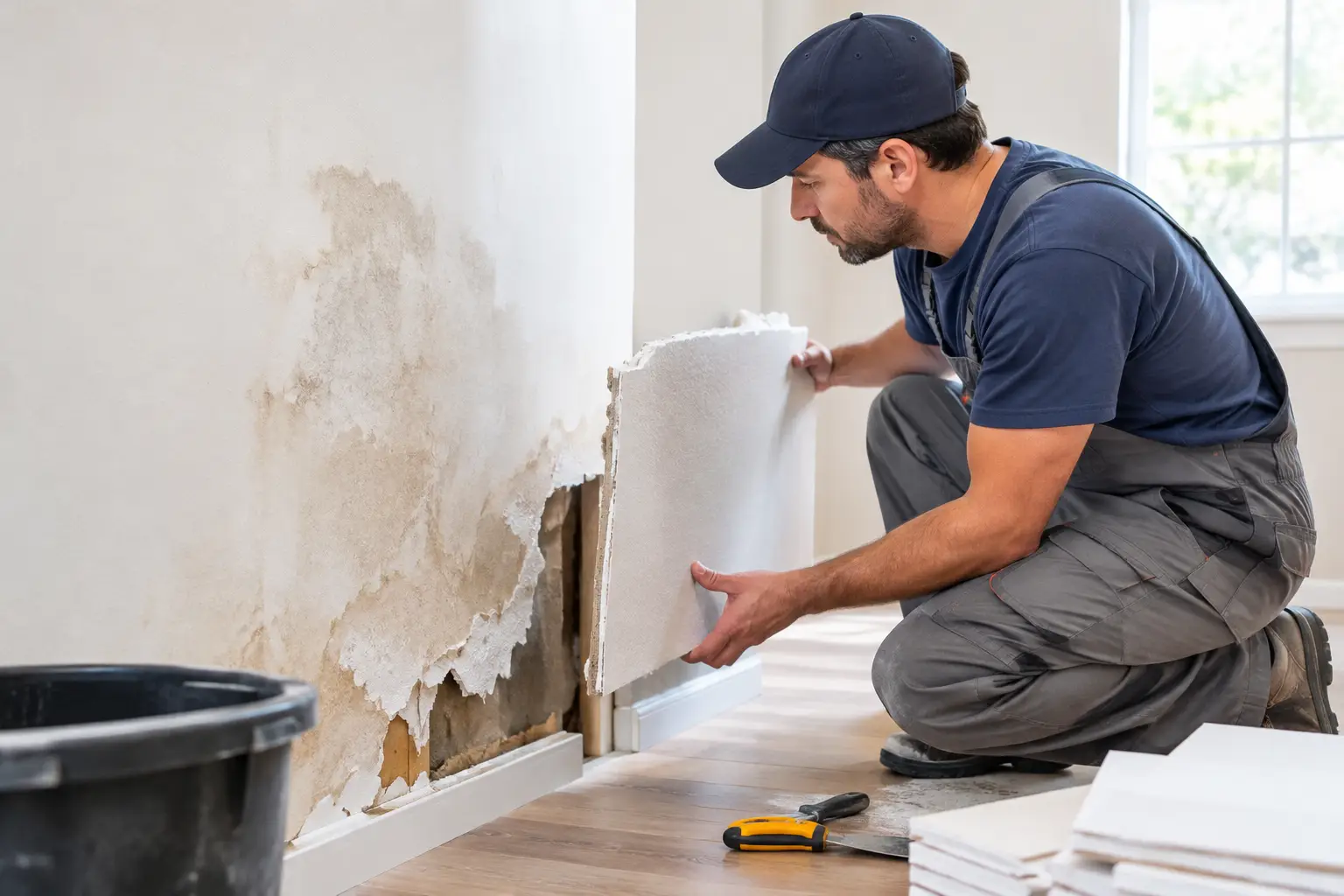
Wall cavities and subfloors are not easy to evaluate without the right equipment and training. Removing too little material can leave damp contamination behind. Removing too much can create unnecessary repair costs. Certified restoration technicians use moisture readings, thermal imaging when appropriate, containment practices, air filtration, and targeted demolition to address the affected area without turning a contained issue into a larger one.
Smoke, Soot, and Air Quality After a Fire
Even a small kitchen fire can create an air quality concern throughout a property. Smoke travels rapidly through open spaces, gaps around doors, ductwork, and upper levels. It leaves behind soot, oily residue, and odors that ordinary household cleaners are not designed to remove.
The type of material burned matters. Protein fires, such as a burned meal, can leave a strong odor with little visible residue. Fires involving plastics, wiring, fabrics, or synthetic furnishings may leave soot and chemical residues on surfaces far from the origin. If those residues are not properly cleaned, odors can reappear and particles may continue to be disturbed during normal activity.
Opening windows can provide temporary ventilation, but it is not a complete smoke cleanup plan. Vacuuming without HEPA filtration or wiping surfaces with the wrong products may smear soot or push it deeper into porous materials. Professional fire restoration may involve detailed cleaning, HEPA air filtration, odor treatment, duct assessment, and removal of materials that cannot be restored safely.
If the property has a furnace or central air system, avoid operating it until the situation has been assessed. The system may carry smoke residue to rooms that were not directly affected by the fire.
Sewage, Mold, and Other Contamination Risks
Sewage backups require a faster and more controlled response than a clean-water leak. Wastewater can contain bacteria, viruses, and other contaminants. It can soak into carpet, padding, drywall, insulation, and personal contents, creating both cleanup and air quality concerns.
Affected areas should be isolated from children, pets, tenants, customers, and employees. Do not use fans to dry sewage-contaminated materials before proper removal and cleaning. Air movement without containment can spread contaminated particles into unaffected portions of the property.
Mold remediation follows a similar principle: address the moisture source first, then contain and remove affected materials using methods appropriate to the extent of growth. Spraying fragrance or bleach into a moldy room may mask the smell, but it does not correct hidden moisture or remove contamination from porous materials. A proper remediation plan protects the unaffected parts of the building while repairs are completed.
How to Protect Air Quality During Restoration
The best restoration plan does more than make a room look clean. It protects occupants while the work is happening and helps prevent the problem from returning afterward. In a well-managed project, technicians identify the source, isolate affected areas, use appropriate personal protective equipment, and control airborne particles with containment and HEPA filtration when needed.
Property owners can help by avoiding unnecessary disturbance. Do not tear out wet drywall, pull up moldy carpet, or scrub soot-covered surfaces without understanding what is involved. Keep people away from the affected area, especially anyone with asthma, allergies, respiratory conditions, or a weakened immune system.
If you are filing an insurance claim, take photos and make a basic record of the loss before cleanup begins, as long as it is safe to do so. Professional documentation of moisture readings, damaged materials, cleaning steps, and drying progress can also help support the restoration process. A qualified contractor can coordinate the emergency work and provide the information needed for your insurance carrier.
When to Call for Air Quality Help
Call for a professional inspection after significant water damage, any sewage backup, visible mold, a fire or smoke event, or persistent odors that do not resolve after normal cleaning. You should also call if a room continues to feel damp, if damage has been present for more than 24 to 48 hours, or if occupants become uncomfortable only when they are in the building.
Lakeshore Restoration LLC provides 24/7 emergency restoration support for property owners across eastern Wisconsin. Certified technicians can inspect the damage, identify moisture and contamination concerns, perform safe cleanup, and manage repairs from mitigation through reconstruction. Fast action can limit the spread of damage and reduce the risk of a larger, more expensive restoration project.
If the air in your home or business does not feel right after a loss event, trust that signal. Keeping people out of the affected area and arranging a prompt, qualified inspection is often the safest next step for both the property and the people who rely on it.


Comments