


Repair or Replace Drywall After Water Damage
A ceiling stain can look minor while moisture is spreading behind the wall. Knowing whether to repair or replace drywall is not just a cosmetic decision after a leak, flood, fire, or contamination event. The right choice protects the framing, insulation, indoor air quality, and long-term value of your Wisconsin property.
Start With the Cause, Not the Stain
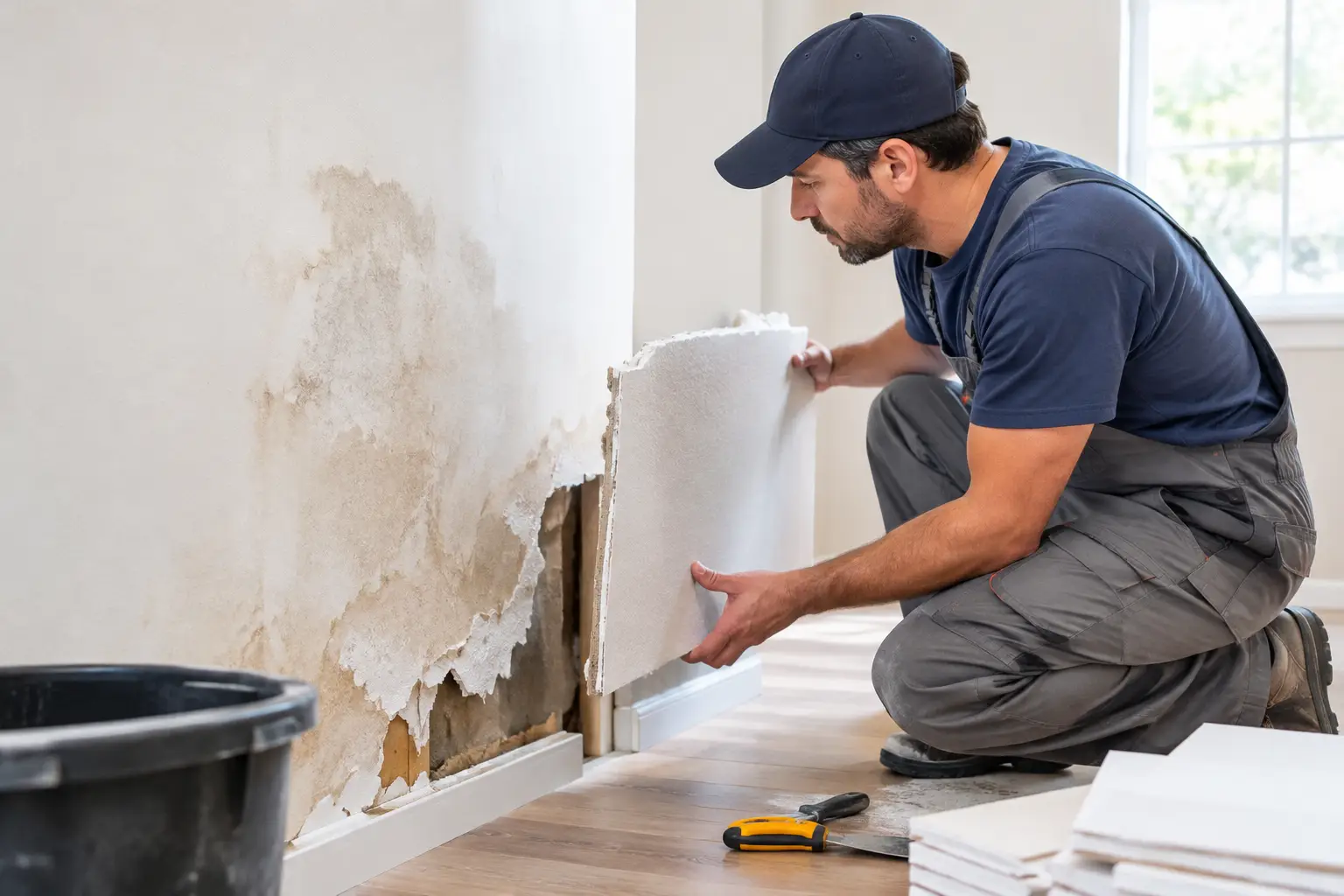
Drywall damage is often most visible after the emergency has passed: a brown ring on the ceiling, soft paint near a baseboard, bubbling tape, or a wall that suddenly feels damp. Those signs matter, but they do not tell the whole story. Before any patching begins, the source of damage must be stopped and the affected area evaluated for hidden moisture or contamination.
A small hole from a door handle is a straightforward repair. A soft wall after a dishwasher leak is different. Water can wick upward through drywall and into insulation, travel along the bottom plate, and remain behind an apparently dry painted surface. Closing the wall too soon can trap moisture where mold may grow and wood components may deteriorate.
Professional restoration begins with identifying the source, documenting conditions, and using moisture meters and other equipment to determine how far the damage extends. This is especially important in basements, bathrooms, kitchens, laundry rooms, and commercial spaces where water may move behind finishes before anyone sees it.
When Drywall Can Be Repaired
Drywall is often repairable when the damage is limited, the material is structurally sound, and the area can be thoroughly dried or cleaned. The key is that the gypsum core has not lost integrity and the wall cavity does not contain a hidden problem.
Minor dents, nail holes, anchor holes, and small impacts generally need patching, joint compound, sanding, priming, and paint. Cracks may also be repaired when they are caused by normal settling and are not continuing to widen. If a crack returns, however, it may point to movement, framing issues, or moisture that needs further investigation.
After a clean-water incident, such as a brief supply-line drip caught quickly, drywall may be saved if it has not swollen, softened, or delaminated. Fast extraction and controlled drying are critical. A restoration team may be able to dry the material in place, verify moisture levels, and avoid unnecessary demolition.
Smoke-damaged drywall can sometimes be cleaned and sealed rather than removed. That depends on how deeply soot and odor have penetrated, the type of fire residue, and whether the board has heat damage. Surface smoke film is not the same as a wall exposed to heavy soot, prolonged heat, or water used during firefighting.
Signs You Should Replace Drywall
Replacement is usually the safer choice when drywall has lost strength, has been contaminated, or cannot be reliably dried and cleaned. Drywall is inexpensive compared with the cost of repairing a concealed mold problem or reopening a finished wall later.
Look closely for these conditions:
Soft, spongy, sagging, or crumbling drywall, especially around ceilings and lower wall sections
Swelling, bubbling paint, separated paper facing, or warped seams and corners
Visible mold growth or a persistent musty odor after a water event
Sewage, floodwater, or other contaminated water contact
Significant smoke, soot, charring, or odor that remains after professional cleaning
Water category matters. Clean water from a broken pipe may allow for more drying and repair options if addressed promptly. Gray water from appliances or showers has a higher contamination risk. Sewage backups and outside floodwater should be treated as contaminated. Porous materials such as drywall, insulation, carpet padding, and some contents commonly need removal because they cannot be disinfected with confidence.
Ceilings deserve particular caution. Even if a water-stained ceiling is still intact, sagging drywall can fail without warning. Keep people away from the area, do not puncture or pull down the ceiling yourself, and have the source and structure assessed. A controlled removal is far safer than waiting for a collapse.
Repair or Replace Drywall After Water Damage
The decision often comes down to four questions: How long was the drywall wet? What type of water affected it? Has it dried back to an acceptable moisture level? Is there damage or contamination inside the wall cavity?
Timing is a major factor. Within the first day or two, rapid water extraction and drying may save materials that would otherwise need replacement. Once drywall has remained wet long enough to swell, weaken, or support mold growth, replacement becomes more likely. Wisconsin's changing temperatures and indoor humidity can also affect drying conditions, particularly in enclosed rooms and lower levels.
The location of the damage matters as well. Water entering at the bottom of a wall can soak insulation and spread behind baseboards. Water from above may affect ceiling cavities, light fixtures, and multiple wall surfaces. A visible stain is often smaller than the actual wet area, which is why a surface-only repair can fail.
A qualified restoration crew may make precise flood cuts - removing only the section of wallboard needed to access wet insulation, dry framing, and clean the cavity. This approach can preserve unaffected materials while giving technicians access to the areas that require attention. After drying is verified, reconstruction can include insulation, new drywall, finishing, priming, and paint preparation.
Why Patching Over Damage Creates Bigger Problems
Patching is appealing because it appears fast and inexpensive. It can also hide the evidence needed to determine whether the problem is actually resolved. Paint, spackle, and stain-blocking primer do not dry wet insulation or remove contamination behind the wall.
When moisture remains concealed, the results can include musty odors, recurring stains, peeling paint, mold growth, and damage to wood framing. For landlords and commercial property managers, unresolved wall damage can also create tenant complaints, maintenance disruptions, and more extensive repair costs later.
The same principle applies after a fire. Odor can linger in porous building materials even after visible soot is gone. If drywall is badly affected, sealing only the surface may not deliver the clean, safe result the property needs. Proper evaluation separates materials that can be restored from those that should be removed.
A Safer Path From Emergency Cleanup to Rebuild
Property owners should not have to coordinate one company for extraction, another for mold concerns, and a third for drywall repairs. A full-service restoration process keeps the work organized and helps prevent missed steps.
First, the immediate hazard is controlled. That may involve stopping a water source, extracting standing water, isolating contaminated areas, removing damaged materials, or addressing smoke and soot residue. Next comes drying, cleaning, and verification. Moisture readings, photographs, affected-material documentation, and clear scope notes help establish what happened and what work is required.
Only after the structure is clean and dry should reconstruction move forward. New drywall installed over a wet or contaminated cavity is not a repair. It is a delay of the real repair.
For insurance claims, detailed documentation can make a practical difference. Photos of affected materials, moisture records, emergency-service notes, and an itemized repair scope can support communication with your insurer. Coverage depends on the policy and cause of loss, but prompt documentation gives property owners a clearer starting point.
When to Call for Help
Call for professional assessment if drywall damage follows a burst pipe, appliance leak, roof leak, flooded basement, sewage backup, fire, or suspected mold issue. You should also call when water has reached a ceiling, electrical area, insulation, multiple rooms, or any occupied commercial space.
Lakeshore Restoration LLC provides 24/7 emergency response for property owners across Two Rivers, Manitowoc, Sheboygan, Green Bay, and surrounding communities. Certified restoration work can address the immediate loss, document the damage, and carry the project through structural drying and final repairs.
If you are unsure whether a damaged wall can be saved, avoid painting over it or closing it up. Keep the area accessible, stop the source if it is safe to do so, and get the conditions checked. A timely decision can preserve more of your property and prevent a small repair from becoming a larger restoration project.


Comments