.png)


Commercial Flood Response Guide for Businesses
A flooded office, retail store, warehouse, or apartment building can become a safety and business-continuity problem within minutes. This commercial flood response guide gives Wisconsin property owners and managers a clear order of operations: protect people first, stop further damage where possible, document the loss, and begin professional drying before moisture reaches deeper into the building.
The right response depends on where the water came from, how long it has been present, and what materials it has reached. A clean supply-line leak is handled differently than storm runoff, sewage backup, or water that has moved through a parking lot or loading area. Waiting to see whether the water dries on its own is rarely the lower-cost choice. Wet drywall, insulation, flooring, contents, and framing can hold moisture long after puddles disappear.
Commercial Flood Response Guide: The First Hour
Your first responsibility is protecting employees, tenants, customers, and anyone else on site. If water is near electrical panels, outlets, equipment, gas appliances, or ceiling fixtures, keep people away from the affected area. Do not walk through standing water until the electrical risk has been assessed. Shut off power only if it is safe to do so and you know the correct procedure.
If the flood involves sewage, outdoor floodwater, a toilet overflow, or a drain backup, treat it as contaminated. Limit access immediately. Contaminated water can carry bacteria, viruses, chemicals, and other hazards that should not be handled with basic mops, shop vacuums, or unprotected staff.
Once the area is secure, stop the source if possible. This may mean closing a local water valve, turning off a malfunctioning appliance, placing temporary protection around an opening, or contacting the utility company. Do not delay emergency service while trying to solve a major source alone. A broken main, roof failure, or storm-related intrusion may need immediate professional attention.
Take photos and video before moving items whenever it is safe. Capture the source of water, standing water levels, affected rooms, damaged inventory, equipment, walls, floors, and exterior conditions. Keep a written timeline that records when the damage was discovered, who was notified, and what actions were taken. This record can support insurance communication and help establish the scope of restoration.
Notify the Right People Early
For a commercial property, flood response is not only a maintenance issue. It may affect insurance coverage, tenant obligations, payroll, customer service, health requirements, and your ability to reopen. Notify your insurance carrier or agent promptly, then contact a qualified water damage restoration company that can document conditions and begin mitigation.
If you lease the space, notify the property owner or management company according to the lease terms. If you own a multi-tenant property, give tenants direct instructions about access, safety, and any temporary changes to operations. Clear communication prevents employees or tenants from entering an unsafe area and reduces confusion when conditions change.
Businesses with sensitive operations should also consider their regulatory responsibilities. Food-service areas, medical offices, child-care spaces, manufacturing facilities, and buildings with stored records or electronics may require specialized cleanup decisions. The question is not simply whether an item looks dry. It is whether it can be cleaned, documented, and returned to service safely.
Remove Water, Then Find Hidden Moisture
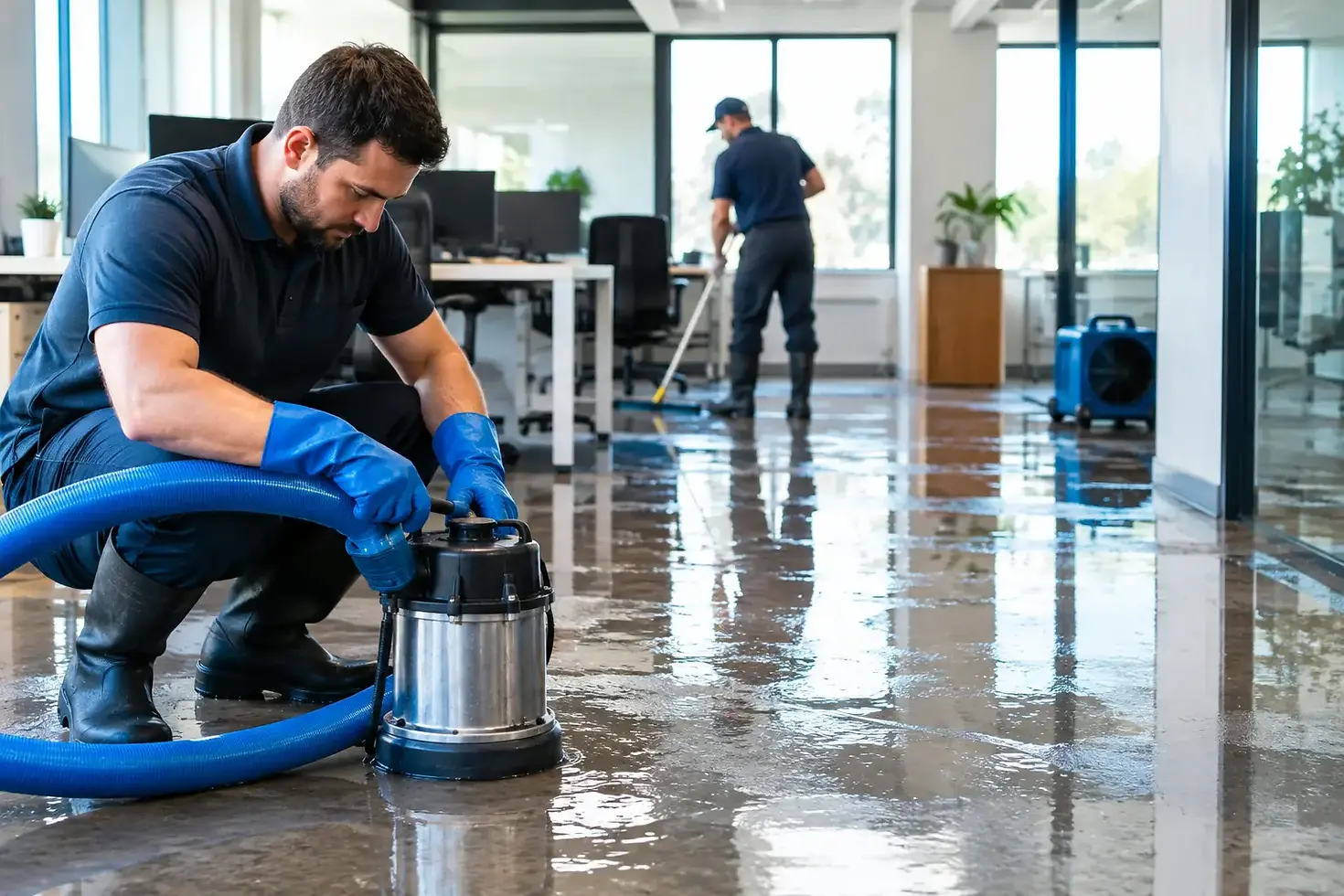
Fast extraction matters because water spreads through finishes and building cavities. A restoration crew should assess the affected materials, extract standing water, and use commercial drying equipment based on actual moisture conditions. Fans alone may move air, but they do not replace a controlled drying plan with dehumidification, moisture readings, and daily monitoring.
Water often travels farther than the visible flood line. It can wick into drywall, absorb into insulation, migrate beneath flooring, soak baseboards, enter wall cavities, and affect adjacent suites. In a commercial building, water may also move through utility openings, elevator areas, mechanical rooms, and lower levels.
Why material type changes the plan
Some materials may be dried and saved if addressed quickly. Non-porous surfaces, certain commercial-grade flooring systems, metal shelving, and solid wood components can sometimes be cleaned and restored. Other materials, including wet insulation, swollen particleboard, carpet padding, and contaminated porous materials, may need removal.
The source category changes that decision. Clean water from a broken pipe may allow more salvage options than water from a sewer backup or outdoor flooding. If water is contaminated, the priority shifts from drying alone to safe removal, cleaning, disinfection, and disposal of materials that cannot be reliably restored.
A certified restoration team uses moisture meters, thermal imaging when appropriate, and documented drying goals to determine when materials have reached an acceptable condition. This work helps prevent a common problem after commercial flooding: reopening the space after surface cleanup while moisture remains behind walls or under flooring.
Protect Inventory, Equipment, and Records
Move dry, unaffected items out of the impacted area if it can be done safely. Elevate boxes, furniture, merchandise, and electronics off the floor. Separate wet contents from dry contents so moisture does not continue spreading through stored materials.
Do not plug in wet electronics or operate equipment that may have been exposed to water. Computers, point-of-sale systems, appliances, machinery, and electrical components may require evaluation by the appropriate technician before use. Trying to power equipment back on too soon can create a shock hazard, cause additional damage, or complicate an insurance claim.
For paper files and records, avoid stacking wet documents into dense piles. Keep them separated as much as practical and preserve them for evaluation. Some records can be stabilized or recovered, but handling them incorrectly can make damage worse. Photograph inventory, save receipts for emergency expenses, and retain damaged items until the insurance carrier or restoration team advises otherwise.
Keep Your Business Operating Where You Can
Flood recovery does not always require closing the entire operation. It depends on the affected area, contamination level, building systems, and the nature of your business. A retail space may be able to isolate a back room and continue serving customers. A medical office or food-service operation may need a more limited reopening plan because sanitation requirements are higher.
Create a temporary operating plan as early as possible. Identify which services can continue, where employees should report, how customers will be notified, and whether inventory or equipment can be relocated. If the building has multiple tenants, coordinate access and work hours to minimize disruption while allowing drying and repairs to proceed.
Be cautious about reopening based only on appearance. Dry floors do not guarantee dry walls, safe indoor air conditions, functional electrical systems, or clean surfaces after contaminated water. A proper clearance decision should account for the source of water, completed cleaning, moisture documentation, and any needed inspections.
What Professional Commercial Flood Restoration Should Include
Commercial flood losses need more than emergency extraction. The most effective restoration plan connects immediate mitigation to the final repair so that nothing falls through the cracks. At Lakeshore Restoration LLC, that can include emergency water removal, moisture inspection, controlled structural drying, sewage cleanup when needed, odor control, mold prevention, insurance documentation support, and reconstruction of damaged areas.
Ask your restoration provider how they will document the loss and communicate progress. Daily moisture logs, photographs, equipment records, and a clear scope of work help property owners make decisions and provide useful information to insurers. IICRC-certified technicians bring established restoration standards to the job, but communication matters just as much when your business is trying to reopen.
There are trade-offs to discuss. Removing materials quickly can reduce drying time and hidden moisture risk, but it may disrupt operations more in the short term. Attempting to dry every material may preserve finishes, but can take longer and may not be appropriate after contaminated water exposure. A good plan explains those choices in plain language rather than treating every flood the same way.
Prevent the Next Loss During Repairs
Once the emergency is controlled, use the repair process to correct the failure that led to the flood. That could mean repairing a roof or foundation drainage issue, replacing failed plumbing, sealing openings, updating sump equipment, or changing how inventory is stored. If a lower-level storage room has flooded before, elevating contents and improving drainage may be as valuable as replacing damaged finishes.
Review your business continuity plan while the event is still fresh. Confirm emergency contacts, water shutoff locations, vendor information, insurance policy details, and responsibilities for after-hours calls. Give managers a simple instruction: protect people, report the damage, and avoid unauthorized cleanup in contaminated or electrically unsafe areas.
A fast, documented response gives your property the best chance of a safe recovery and gives your business a clearer path back to normal operations.


Comments